Mutianyu Great Wall: How to Get There, Ticket Prices and Cable Car Routes
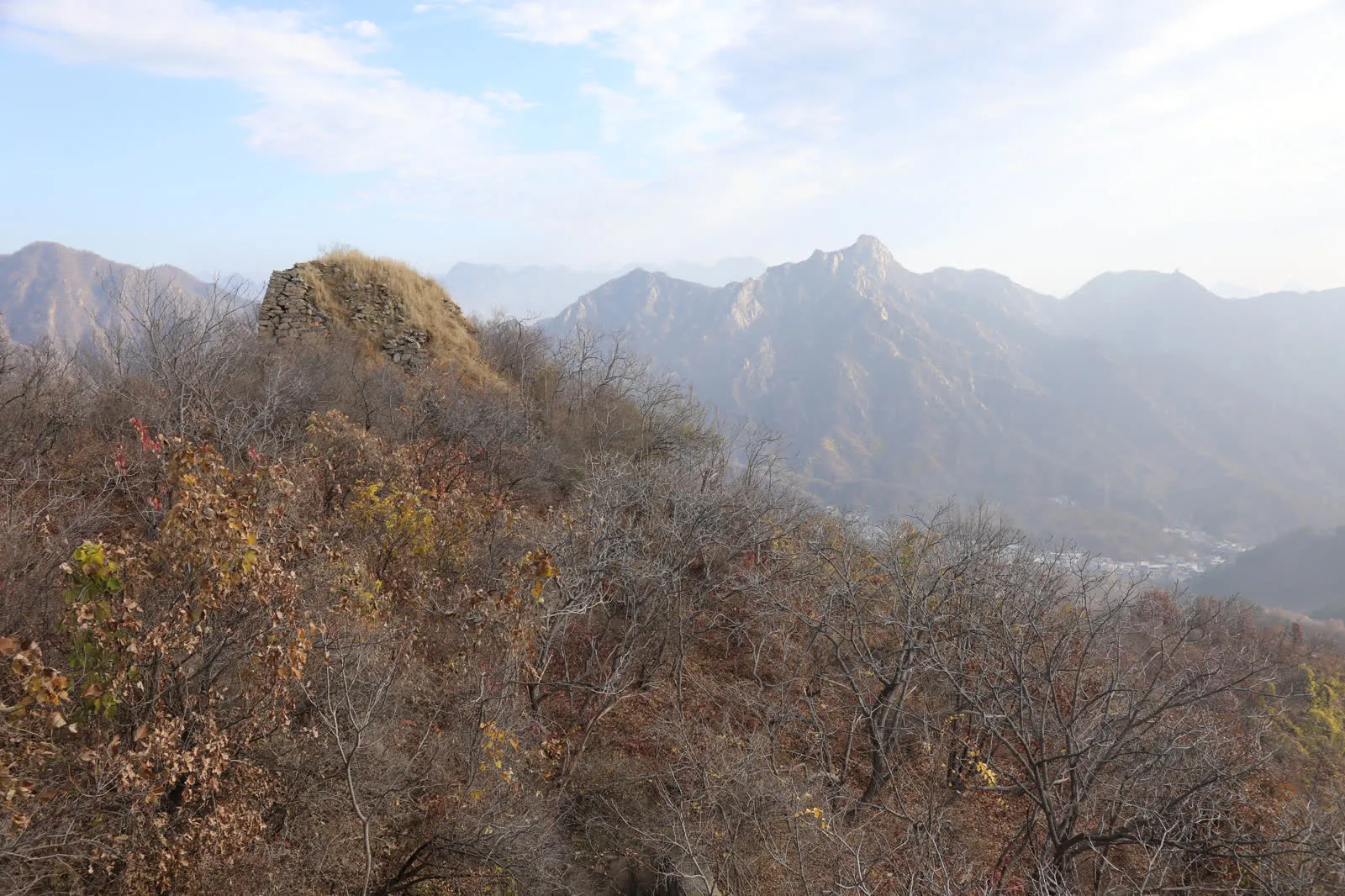
Key Takeaways
- Admission is ¥45 for the postcard ticket or ¥40 for the plain e-ticket. The internal shuttle adds ¥15 and a return cable car ride is ¥140, all sold on the scenic area's own booking system.
- Tickets are real-name reservations, bookable up to 30 days ahead, one ticket per passport per day. You show the original passport you booked with; there is no ticket swap.
- The MuBus direct coach leaves Dongzhimen Station Exit B1 at 08:00, 10:00 and 13:00, ¥80 return. The 08:00 coach reaches the wall around 09:30 and the operator builds in five hours on site.
- The cable car and the chairlift/toboggan are run by two different companies, sold at two different gates, and the tickets do not transfer. Cable car bookings enter through the north gate.
- Bad weather closes the wall. The scenic area temporarily shut on several summer days this year, and it publishes every closure on its notice page. Check it the morning you travel.
Mutianyu Great Wall: How to Get There, Ticket Prices and Cable Car Routes
Quick answer: Mutianyu is 70 km northeast of central Beijing. Admission is ¥45 for the postcard ticket or ¥40 for the plain e-ticket, plus ¥15 for the shuttle and ¥100/¥140 for a one-way or return cable car. The MuBus coach leaves Dongzhimen Station Exit B1 at 08:00, 10:00 and 13:00. Book with your passport; no ticket swap is needed.
This guide contains affiliate links. If you book through them we may earn a commission, and that never changes the price you pay or what we recommend.
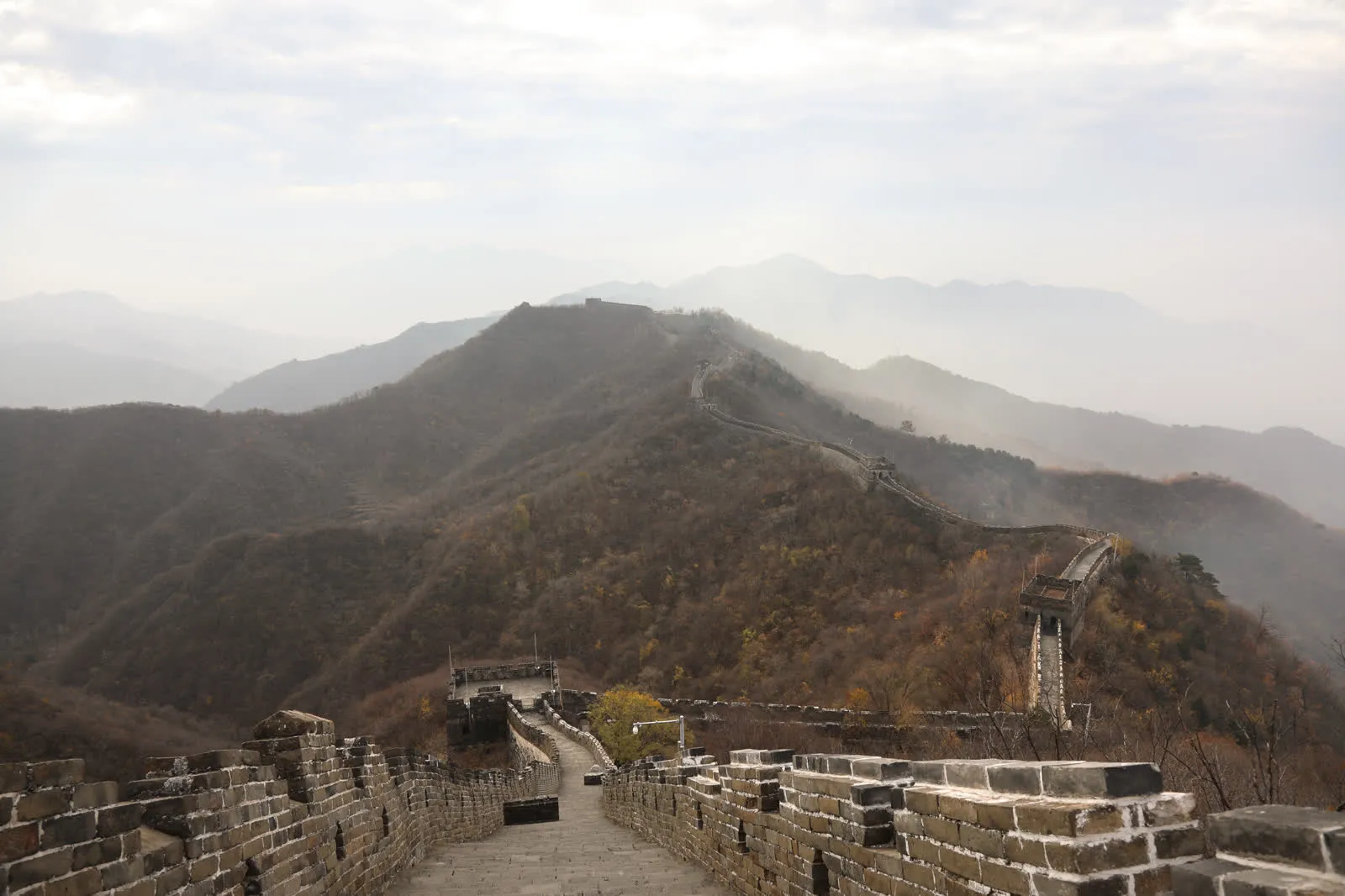
Mutianyu sits 70 km from central Beijing in Huairou district, and the scenic area calls its stretch the essence of the Ming-dynasty wall. For first-time visitors it is the easiest section to say yes to: a cable car, a chairlift, a toboggan, and a direct coach from Dongzhimen station on Line 2. You get watchtowers you can walk between, forest on both sides, and a day that needs no car hire and no tour group.
The details below come from the scenic area’s own booking system, visitor notice and announcement pages, plus the coach operator’s published schedule. Where something could not be pinned down, the guide says so.
What does a Mutianyu ticket cost?
Mutianyu sells two admission tickets at two prices, and most confusion starts there. Both are real. Here is the price list:
| Ticket | Price per person | What it covers |
|---|---|---|
| Adult, postcard admission | ¥45 | Entry, plus a collectable postcard |
| Adult, plain e-ticket | ¥40 | Entry only |
| Student (undergraduate or below, valid student ID) | ¥20 regular / ¥25 postcard | Concession admission |
| Foreign visitor aged 6–18 | Concession rate, same as student | Proof of age required at the gate |
| Internal shuttle, return | ¥15 | Service area to ticket check, about 3 km each way |
| Cable car | ¥100 one way / ¥140 return | Up to Tower 14 |
| Chairlift and toboggan (slideway) | Roughly ¥100 one way / ¥140 return | Separate operator, sold at the slideway office |
The two admission tickets cover the same wall. The postcard version adds a souvenir postcard, which you exchange at the ticket service centre after your visit; the plain e-ticket does not include one. Blogs that quote a single “Mutianyu ticket price” are usually quoting the postcard ticket, because that is the product the English booking page leads with. The Chinese booking flow also lists a plain e-ticket a few yuan cheaper.
Three rules about the add-ons are worth knowing before you budget:
- The shuttle and the cable car price children by height. Anyone under 1.2 m rides free, everyone taller pays the full fare, and there is no concession for age or disability on either.
- Admission covers the wall alone. It does not include the shuttle, the cable car, the chairlift or the slideway, so a ¥45 ticket will not get you up the mountain.
- On the official system the common adult bundle, postcard admission plus return shuttle plus return cable car, shows as ¥200, which is the three lines above added together.
One more number people look for and rarely find: a taxi or chartered car to Mutianyu has no published official rate. Quotes vary by operator and by how long you want on the wall, so this guide will not invent a figure. Ask two or three drivers and compare, and remember that a cheap quote sometimes means a shorter stop or a shopping detour. If you would rather have transport and tickets arranged together, Trip.com lists Mutianyu day tours and ticket bundles with pickup included.
How do you get to Mutianyu from Beijing?
There are three realistic routes: the MuBus direct coach, a taxi or ride-hailing car, and a private car with driver. The coach is the one with a published timetable and a fixed fare, and it is what most independent travellers use.
| Option | Cost | Time | Where it starts |
|---|---|---|---|
| MuBus direct coach | ¥80 return / ¥40 one way | About 90 minutes each way | Dongzhimen Station Exit B1, Line 2 |
| Taxi or Didi | No published official rate; quotes vary | About 90 minutes in light traffic | Your hotel |
| Private car with driver | No published official rate; quotes vary | Flexible | Hotel pickup on some services |
The MuBus loads at Dongzhimen Station Exit B1, where a guide in a MuBus vest meets passengers at the subway exit. The fare is ¥80 return or ¥40 one way, half price for children under 10 and free for children under 3. The ticket includes a Chinese-speaking guide, fast-track entry without a reservation, and the return shuttle inside the scenic area; the operator states that tickets bought on the coach are sold at no markup. Its two published day schedules:
| Departure | Arrive at the wall | Time on site | Leave | Back in the city |
|---|---|---|---|---|
| 08:00 | 09:30 | 5 hours | 15:00 | 16:30 |
| 10:00 | 11:30 | 5 hours | 16:30 | 18:00 |
The operator’s front page also lists a 13:00 departure and an earlier 06:30 coach for peak periods. Timetable details for those two are not published on the site, so confirm by phone or on the booking page if you need them. Read all of these times as the operator’s own schedule, because one bad stretch of traffic on the expressway out of the city slides the whole afternoon.
The coach leaves from a useful place if you are arriving by plane. Capital Airport’s express train ends at Dongzhimen, costs ¥25 one way, runs roughly every ten minutes, and connects to Line 2 and Line 13, which is exactly where MuBus loads. From Daxing Airport in the south, the express line reaches Caoqiao in 19 minutes for ¥35, with business class at ¥50, and you can check in for your flight at Caoqiao on the way back.
A taxi from central Beijing is a long ride, and the return leg needs planning: you either keep the driver waiting for hours or arrange a pickup time in advance. If you are set on a car, a private service with a fixed waiting window is easier to plan around than a metered ride. Whichever route you take, maps and ride-hailing apps need setup first, so see our guide to using Google and WhatsApp in China before you rely on either.
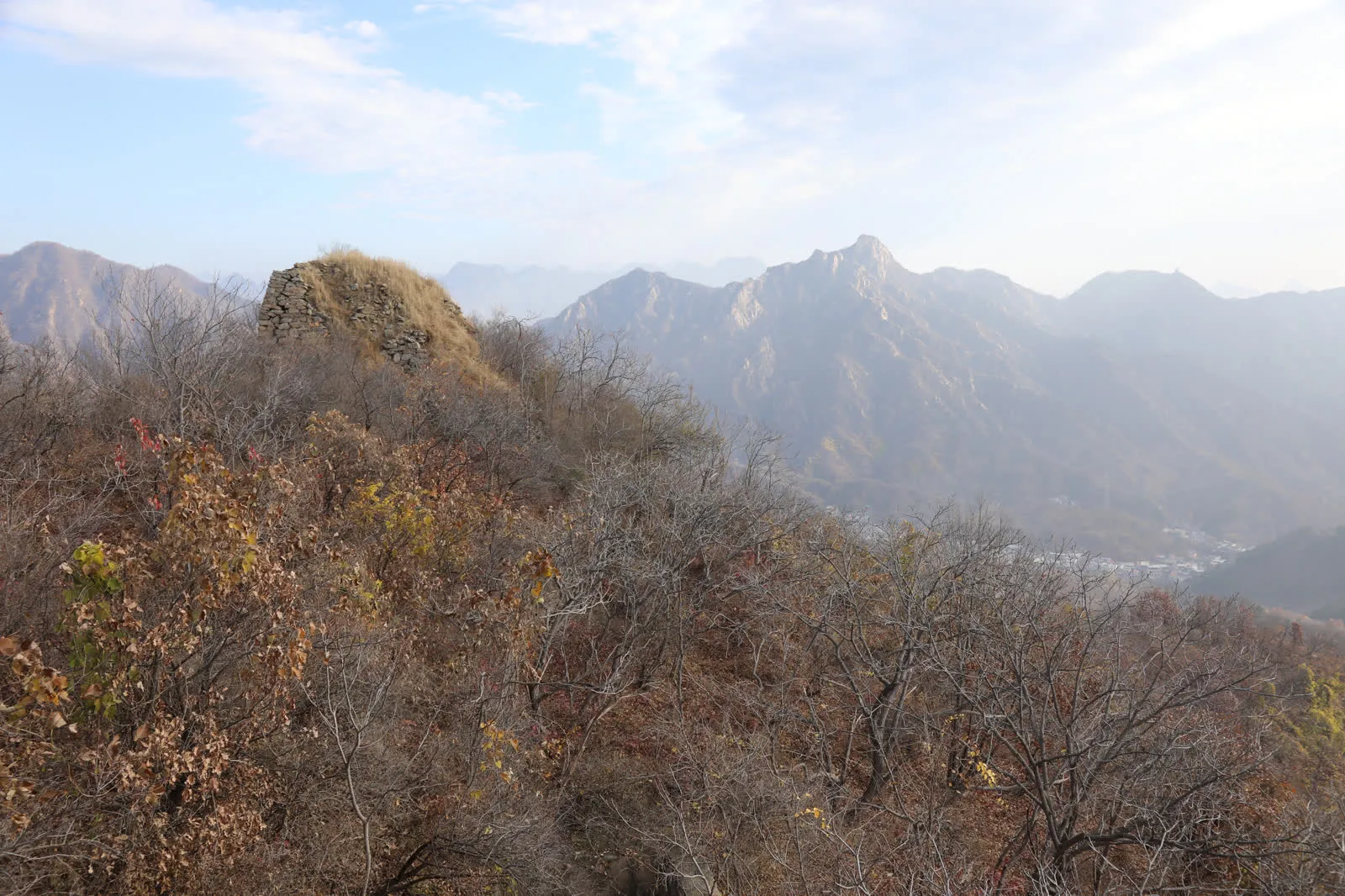
Do you need to book Mutianyu tickets in advance?
Mutianyu runs a real-name reservation system. You book against a document, you pay, and you turn up with that document. The visitor notice sets out the rules plainly:
- One document, one ticket, per day. The system accepts a Chinese ID card, a foreign permanent residence ID, or a passport, and reservations open 30 days ahead. A family of four needs four documents and four names on the order.
- Real details, not initials. Each ticket carries the visitor’s name, document number and a working mobile number, so the operator can reach somebody if anything changes.
- No ticket swap. Visitors who book with a passport go straight to the gate and show the original document. Nothing to print, nothing to exchange.
- Refunds and date changes. If you have not been checked in yet, you can refund or reschedule on the booking platform until midnight on the day of your visit. After that you cannot refund and you cannot enter. Approved refunds return to the original payment method within seven working days, and the helpline is 400-632-9662.
Is a reservation compulsory? In practice, no. Ticket windows stay open during the day, with sales stopping one hour before closing, and the MuBus sells tickets on the coach for its passengers. What the reservation buys you is certainty. The official booking calendar publishes remaining inventory per day, and the numbers show how much slack the system has. Around the start of the Golden Week holiday, about 35,900 tickets were still available for the first day, about 34,900 for the day after, and close to 39,600 for dates a week out, all under a ceiling in the region of 40,000. On ordinary days the calendar barely moves. When the ceiling bites during Chinese holidays, booked visitors win and walk-ups queue, so book the date you want once your itinerary is fixed, and book early anywhere near Golden Week. Our walkthrough of booking Forbidden City tickets as a foreigner covers the sharper version of the same pattern, where the gate sells nothing at all.
Cable car or chairlift and toboggan: which route should you take?
Mutianyu has two separate lift systems, run by two separate companies, and their tickets do not transfer. The scenic area says this outright in its visitor notice, and it changes how you plan the day.
| Cable car | Chairlift and toboggan | |
|---|---|---|
| Where it takes you | Tower 14 viewing platform | Up by chairlift, down by toboggan |
| Price | ¥100 one way / ¥140 return | Roughly ¥100 one way / ¥140 return, paid at the slideway office |
| Where you buy it | The official booking system, bundled or separately | At the slideway office on site |
| Entry gate | North ticket gate only | Slideway ticket gate only |
| Under 1.2 m | Free | Free |
A few consequences follow from that table.
First, each lift booking is valid only at its own gate: cable car at the north gate, chairlift and toboggan at the slideway gate. Arrive with the wrong booking and you cross the entrance service area, which stretches about 3 km from the shuttle station to the ticket check.
Second, the ¥200 bundle on the official system covers admission, return shuttle and return cable car. The toboggan is not part of it, and its price appears nowhere on that booking page, because the slideway belongs to a different operator. Budget separately if the slide is the thing you actually want.
Third, the two systems serve different halves of the same ridge. The cable car lands at Tower 14, midway along the day route, which runs from Tower 1 to Tower 20. Riding up by chairlift puts you on the eastern stretch, from where most people slide back down. Riding up one and down the other crosses the whole mountain, and it simply means paying both operators on the day.
After dark the picture shrinks: the site also runs a night session, and the visitor notice states that the night route opens towers 10 to 15 only, a fraction of the day circuit.
What time should you leave Beijing?
Opening hours move with the seasons, and the gap between them is an hour at the end of the day:
| Season | Days | Hours |
|---|---|---|
| Peak, 16 Mar to 15 Nov | Monday to Friday | 07:30–18:00 |
| Peak | Saturday and Sunday | 07:30–18:30 |
| Off-peak, 16 Nov to 15 Mar | Every day | 08:00–17:30 |
Ticket sales stop one hour before closing and ticket checking stops half an hour before closing, so on a peak-season Friday the last ticket is sold at 17:00 and the gates close to new arrivals at 17:30. The cable car keeps the same hours as the site.
The workable day plan, using the published MuBus schedule, looks like this: be at Dongzhimen Station Exit B1 by 07:45, take the 08:00 coach, arrive around 09:30, walk the wall, and be back at the coach park for 15:00. That is five hours at the site, enough to ride up, walk several towers, eat something and ride down without rushing.
The 13:00 coach is the fallback if you miss the morning. It still leaves daylight on the wall in summer. In November, when the site shuts at 17:30 and the last ticket is sold at 16:30, a 13:00 departure gives you barely two usable hours, so do not book it for an autumn or winter visit and expect a relaxed afternoon.
How do you avoid the crowds at Mutianyu?
The booking calendar regularly shows close to 40,000 tickets available on a given day, and on ordinary weekdays the system barely moves. For most visits, Mutianyu is busy by Chinese-tourist-site standards, not by theme-park ones. The crunch dates are the Golden Week stretch in early October, the other national holidays, and summer weekends.
Three things help on normal days:
- Go midweek. Weekend hours run half an hour later, which is a reasonable proxy for weekend demand.
- Take the first scheduled coach. The 08:00 MuBus arrives around 09:30, two hours after the gates open. Driving yourself puts you on the wall before the coach wave.
- Walk away from the cable car. The cable car lands at Tower 14, and most visitors cluster between there and the popular photo spots. The towers towards Tower 1 from the chairlift side see fewer people, simply because fewer visitors enter that way.
During a national holiday, none of that is a fix. Book the morning session when you reserve, expect queues for both lifts, and expect the wall itself to be crowded. The online system splits the day into two entry periods, morning and afternoon, and the morning slot is the one to aim for.
If you are still planning the rest of the city, our Beijing destination hub sets out the wider picture, and the essentials guide to visiting China covers visas, payments and the apps you need before you arrive. Neither is a prerequisite for Mutianyu, but both save time on questions that come up before the wall.
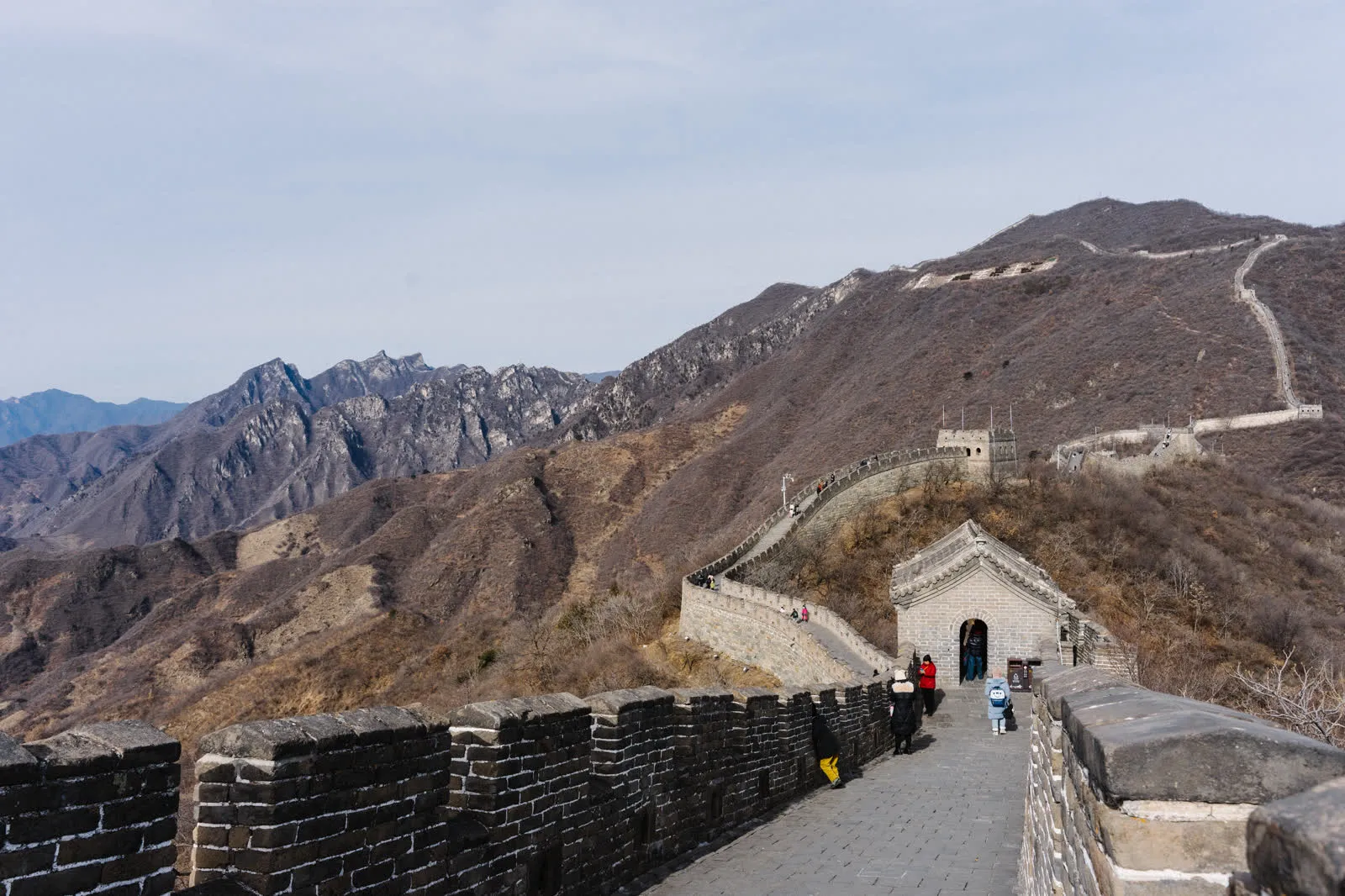
The downsides the official pages admit
Most Mutianyu guides read like a brochure. The scenic area’s own pages are more honest than that, and they list a few things worth reading before you book.
Weather closures are frequent. The visitor notice says the area will close fully or partly when conditions make equipment unsafe: lightning, rain and snow, hail, heavy fog, storms, high wind. The closure list on the notice page is not theoretical. This summer alone it recorded a two-day closure in July, an afternoon reopening after a morning shutdown, an 18:00 early close in August, a next-day full closure, and a reopening notice. A booked ticket is not a guarantee of entry, and refunds are handled through the booking platform.
Restoration work can screen part of the wall. The scenic area has posted a notice about wall restoration work around watchtowers 16 and 17. Sections under repair may be fenced or covered, and no end date is published.
The shuttle is not optional in practice. The shuttle station sits about 3 km from the ticket check, and the route is a return trip of roughly 6 km. Skip the ¥15 shuttle and you add that walking before you have started on the wall, then repeat it at the end of the day.
The two lift systems do not talk to each other. Cable car and chairlift/toboggan are separate companies with separate gates and separate tickets. Ride up in one and down in the other and you pay both, on the day, at the right office. This catches people who assume a “return ticket” covers the whole mountain.
Touts and illegal vehicles are a real enough problem for the official notice to mention them. The visitor notice tells guests not to buy goods from hawkers and not to use illegally operated vehicles. Anyone meeting you near the subway exit with a “special” Mutianyu deal is selling something the operator has no permit for, and the wall is 70 km away, so there is no easy way out of a bad deal once you are in the car.
Prices on third-party sites are not the official prices. Day tours and ticket bundles sold by travel platforms are priced by those platforms. They can be convenient, they can be cheaper as a package, and they can also sit above the official face value. Compare against the official numbers above before you decide.
The short version
Take the 08:00 MuBus from Dongzhimen Station Exit B1, ¥80 return, and bring the passport you booked with. Pay ¥45 for the postcard admission or ¥40 for the plain e-ticket, ¥15 for the shuttle, and ¥140 for the return cable car if you want the easy route to Tower 14, or budget separately for the chairlift and toboggan on the other side of the mountain. Do that outside a Chinese holiday week and you get a wall with fewer people on it than the photographs suggest.
If your dates are tight and you would rather have transport, tickets and pickup handled together, Trip.com sells Mutianyu day tours with hotel pickup . If you want to do it yourself, the official booking system is the cheapest path and takes about five minutes. Either way, check the scenic area’s notice page on the morning you travel, because the one thing that reliably ruins a Mutianyu day is a closure notice you did not read.
Frequently Asked Questions
Frequently Asked Questions
How much does it cost to visit the Mutianyu Great Wall?
Admission is ¥45 for the postcard ticket or ¥40 for the plain e-ticket. Add ¥15 for the internal shuttle and ¥100 one way or ¥140 return for the cable car. A standard adult visit with a return cable car ride lands at about ¥200.
Do I need to book Mutianyu tickets in advance?
Not technically. The scenic area sells real-name reservations up to 30 days ahead and also runs ticket windows during opening hours, with sales stopping one hour before closing. On ordinary weekdays the booking calendar shows tens of thousands of tickets still available, so walk-up tickets are usually there. Book ahead for Chinese holidays.
Can foreigners buy Mutianyu tickets with a passport?
Yes. The official booking form lists passport as a document type alongside the Chinese ID card and the foreign permanent residence ID. One document buys one ticket per day, and passport holders do not exchange the booking for a paper ticket: they show the original passport at the gate.
Is the toboggan at Mutianyu worth taking down?
It is the fastest way off the wall if you end up on the eastern side. The chairlift and toboggan are run by a different company from the cable car, tickets do not transfer between them, and they use a separate gate. Expect roughly ¥100 one way or ¥140 return, paid at the slideway office.
How do I get to Mutianyu from Beijing without joining a tour?
Take the MuBus direct coach from Dongzhimen Station Exit B1 on Line 2. Coaches leave at 08:00, 10:00 and 13:00 and cost ¥80 return or ¥40 one way, with a Chinese-speaking guide on board and fast-track entry included. Dongzhimen is also the city terminus of the airport express from Capital Airport.
Does Mutianyu close when the weather is bad?
It can, and it does happen. The scenic area states it will close fully or partly in weather that makes equipment unsafe, including lightning, snow, hail, fog, storms and high wind. It closed temporarily on several days this summer and posted each closure on its notice page. Check that page the morning you travel.
You might also find useful
How to Buy Forbidden City Tickets as a Foreigner in 2026 (Passport Booking Guide)
Forbidden City tickets cost ¥60 (Apr–Oct) or ¥40 (Nov–Mar) and go on sale exactly 7 days ahead at 20:00 Beijing time. Here is how foreign visitors book with a passport, what happens when tickets sell out, and the refund rules most guides get wrong.
Beijing Attraction Reservations 2026: Which Sites Need Booking and How (Foreigner Guide)
Beijing attraction reservations: which sights still need booking, when tickets are released, the official channels, and whether a foreign passport is enough.
Terracotta Army Tickets in 2026: Prices, Passport Booking and How to Get There
Terracotta Army tickets cost ¥120 for adults and ¥60 for students, the same price all year, and every visitor including foreigners has to book online in advance with a passport. Here is how the official booking works, what the ticket includes, the opening hours, and how to reach the site from Xi'an or the airport.