Zhangjiajie National Forest Park vs Tianmen Mountain: Two Different Parks
Key Takeaways
- They are two separate parks with separate tickets. Zhangjiajie National Forest Park sits at Wulingyuan, about 40 km from the city. Tianmen Mountain rises directly above Zhangjiajie city, a short drive from the centre.
- The forest park costs ¥165 for a single ticket or ¥236 with the eco-shuttle included, valid for four consecutive days with re-entry. Tianmen Mountain currently sells one package at ¥285 for adults, and construction has put its main cableway out of service, and the visit runs on a reduced, construction-adjusted route that depends on your dates.
- Foreigners book both with a passport. The forest park runs timed, real-name entry through five gates; Tianmen Mountain has long used reserved time slots on its main route, and the booking system on both sides is Chinese-first.
- The glass bridge is neither of them. It is in Zhangjiajie Grand Canyon in Cili county, 25 to 30 km from Wulingyuan, sold as its own ticket: ¥216 for the bridge plus canyon route or ¥125 for the bridge only.
- Give each park a full day. If you only have one day, choose one: the forest park for the pillars and valley walks, Tianmen Mountain for the cave arch, the cliff glass walkway and the cableway.
Zhangjiajie National Forest Park vs Tianmen Mountain: Two Different Parks
Quick answer: They are two separate parks, 40 km apart, with two separate tickets. The forest park at Wulingyuan costs ¥165, or ¥236 with the eco-shuttle, and lasts four days. Tianmen Mountain, above the city, currently sells a single package at ¥285 for adults, and its main cableway is out of service for construction, so the visit runs on a reduced, construction-adjusted route. Check the route lineup for your dates. Give each one a full day.
Some links in this guide are affiliate links. If you book through them we may earn a commission, and it never changes the price you pay or the advice below.
Almost every first-timer arrives in Zhangjiajie with the same two questions. Is the forest park the same thing as Tianmen Mountain? And if they are different, which one do I book?
The answer to the first is no. They are two scenic areas run by two different operators, with two different booking systems and two different price structures. They are not close to each other on a map, either. The forest park sits at Wulingyuan, roughly 40 km north-east of the city. Tianmen Mountain rises straight out of Zhangjiajie’s urban edge, a short taxi ride from the airport.
Package tours hide that distinction because they sell both in one itinerary. Independent travellers find out the hard way, usually in a queue, after buying the wrong ticket for the wrong day. This guide splits the two parks apart: what each one is, what each one costs, how the booking works with a passport, and how to decide when you have limited time.
Zhangjiajie National Forest Park vs Tianmen Mountain: are they the same place?
No, and confusing them is the single most common planning mistake. Here is the difference in one paragraph.
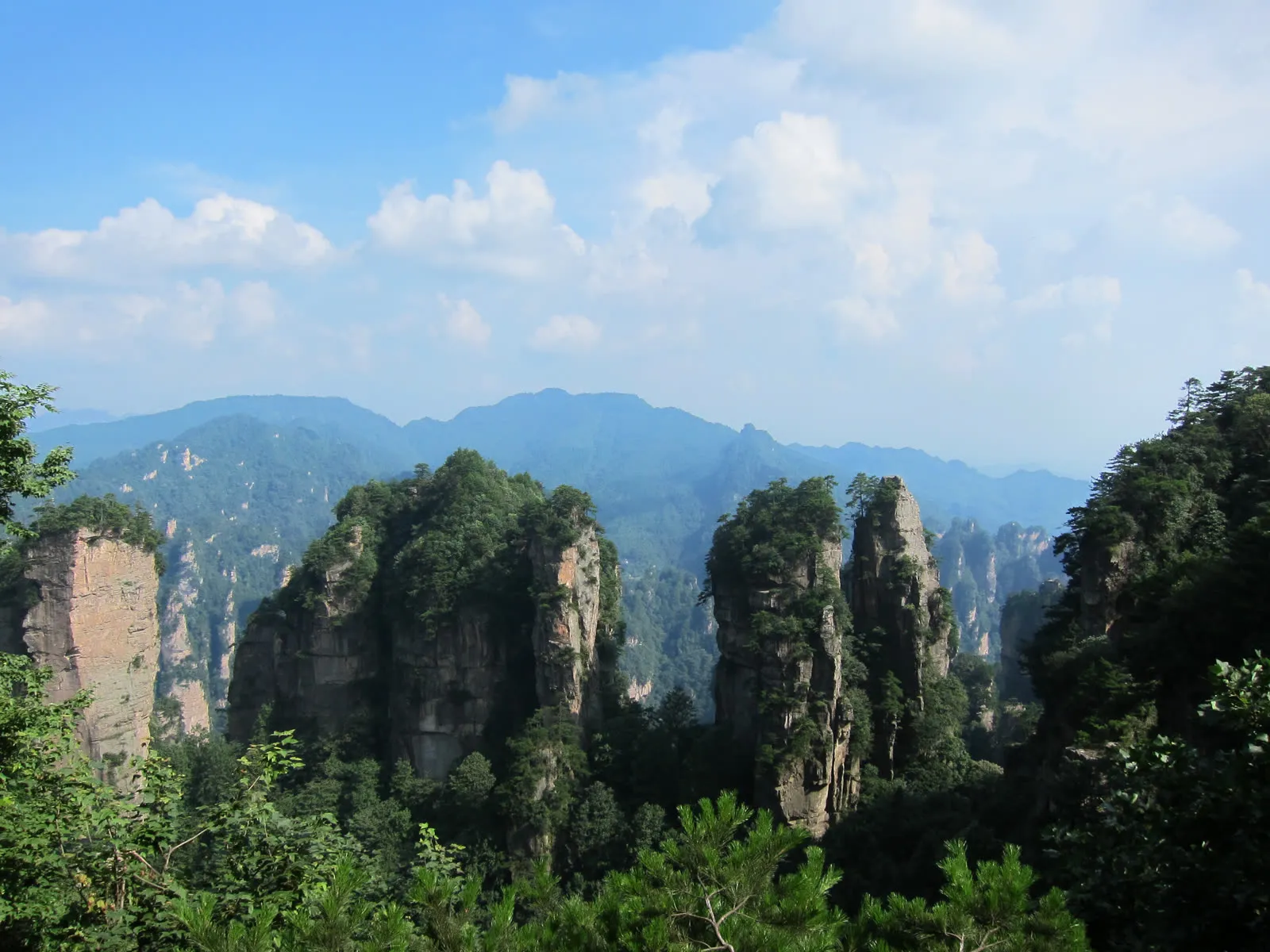
Zhangjiajie National Forest Park is the UNESCO-listed core of the Wulingyuan scenic area: thousands of vertical quartz-sandstone pillars, forested valleys, the Bailong Elevator and the Yuanjiajie viewing platforms. Its entrance gates are all in Wulingyuan district, which has its own town with hotels and restaurants.
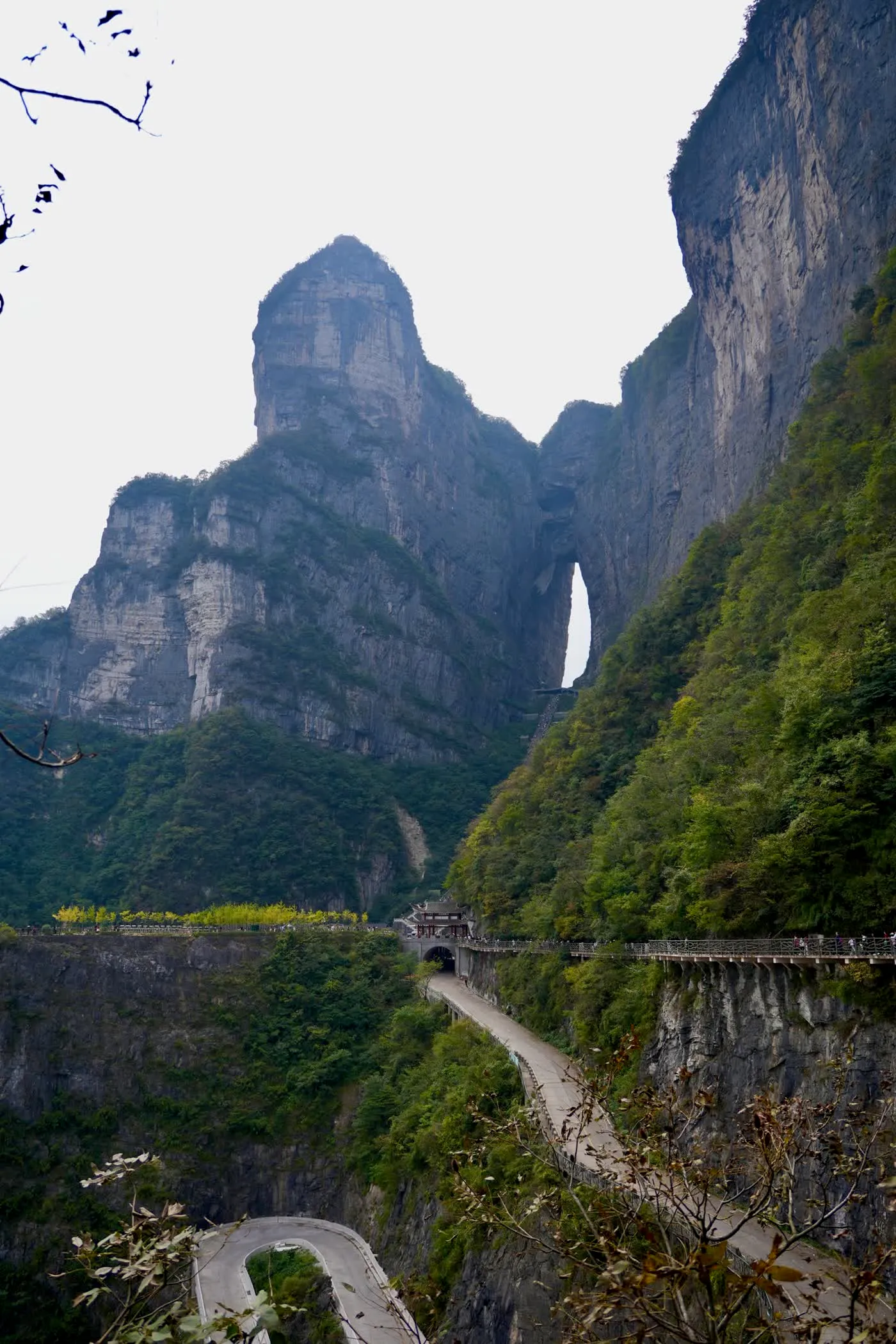
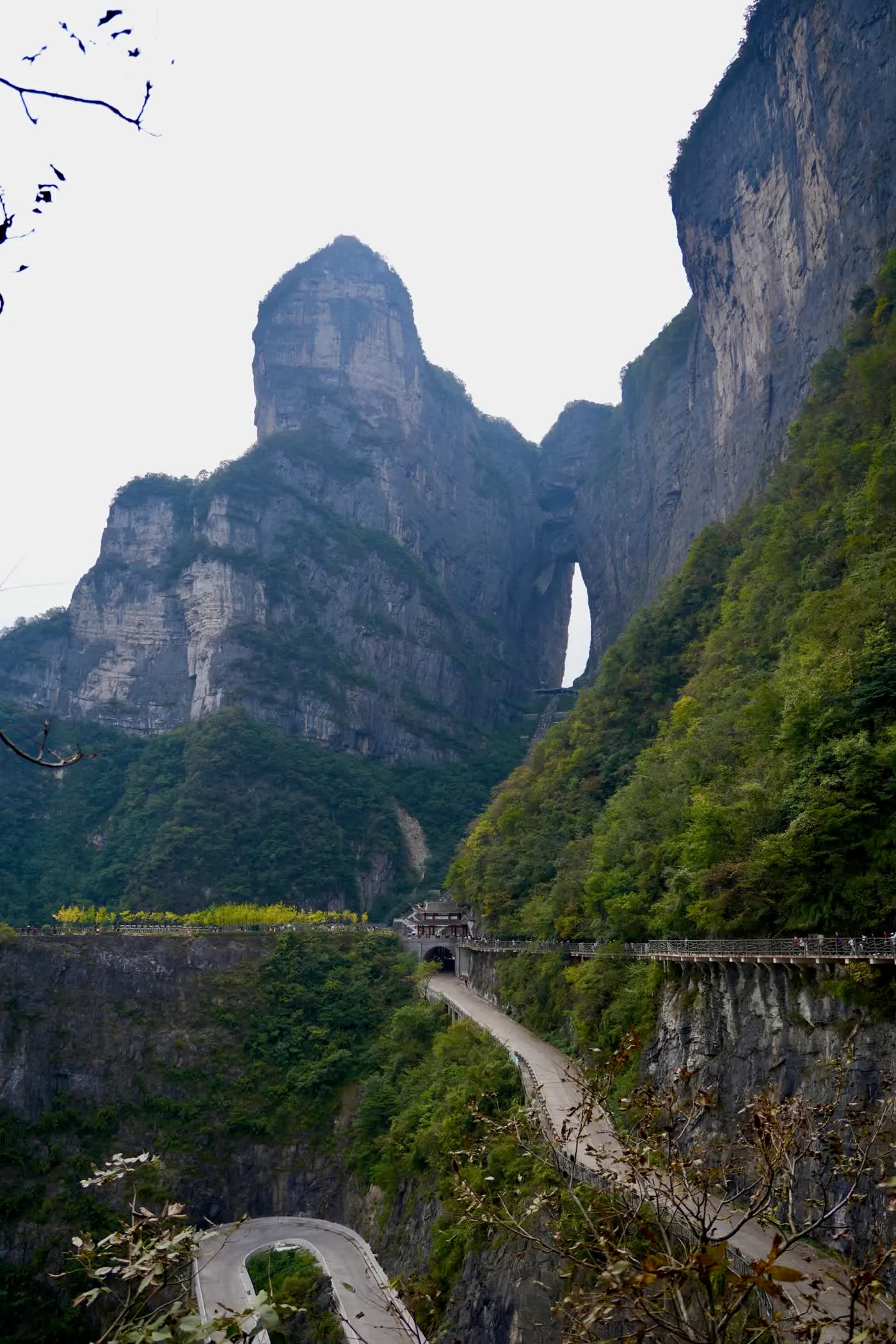
Tianmen Mountain is a separate mountain on the southern edge of Zhangjiajie city, famous for the Heaven’s Gate arch, the 99-bend road, the cliff glass walkway and a cableway that starts in the middle of town. There is no forest valley to walk through and no pillars. You go up, walk the cliff paths, and come down.
One practical consequence: they are booked on different systems, and neither ticket works on the other. If you buy a “Zhangjiajie ticket” in advance, be very clear about which mountain you just paid for.
The 30-second comparison
| National Forest Park | Tianmen Mountain | |
|---|---|---|
| Where | Wulingyuan, ~40 km from the city | Above Zhangjiajie city |
| The hook | Sandstone pillars, valley walks, Bailong Elevator | Heaven’s Gate arch, 99-bend road, cliff glass walkway |
| Ticket | ¥165 single; ¥236 with eco-shuttle | One package, ¥285 adult |
| Validity | Four consecutive days, re-entry allowed | Single visit |
| Time needed | One or two full days | Four to six hours |
| Walking | Long but mostly flat valley paths, plus stairs | Cliff paths and stairs, with escalators and cableway |
| Weather risk | Mist can hide the pillars for hours | Fog removes the point of the trip entirely |
| Best base | Wulingyuan | Zhangjiajie city centre |
What do tickets cost, and do you need two of them?
Yes, you need two, and they add up quickly.
National Forest Park (no more high and low season pricing):
- Single ticket ¥165, or ¥83 for a half-price ticket
- Combined ticket with the internal eco-shuttle ¥236, or ¥119 half price
- Annual pass ¥310 including the shuttle
- The ticket covers four consecutive days and allows multiple entries within that window
- Free entry for under-14s, over-65s, disabled visitors, and active military personnel and their families
- Half price for 14-18s, 60-65s, and full-time university students and below
The internal eco-shuttle is the green buses that move you between the gates and the main viewpoints. You can walk some of it, but the distances are real, and almost everyone ends up buying the ¥236 combined ticket. Cableways and the Bailong Elevator are separate purchases on top of either ticket: the elevator runs ¥65 one way, the Tianzishan cableway ¥72, and the Huangshizhai cableway ¥65, all per single ride. For a normal two-day visit, a four-day ticket plus one or two one-way rides works out cheaper than any pass built around repeated rides.
Tianmen Mountain sells one package that covers the gate, the cableways, the escalators and the road shuttle for the day. The current adult price is ¥285, with concession rates of ¥149 and ¥113 for eligible seniors and students, and children under 14 enter free. The scenic area publishes the arithmetic behind that package: a ¥72 gate ticket plus discounted interim rates on parts of the transport package while the main cableway is out of service. If you buy through a reseller, expect the same face value or slightly above, and check what the package includes before paying, because the included items changed with the construction.
Trip.com sells Zhangjiajie park tickets and day toursWhat you actually see at each park
The forest park is a mountain plateau the size of a small city, and that is not an exaggeration. It has its own internal bus network, several cableways, and walking routes measured in hours. The headline sights:
- Yuanjiajie, with the Hallelujah-style pillars and the First Bridge Under Heaven, reached by the Bailong Elevator or on foot
- Yangjiajie, the quieter and more vertical side, with the Natural Great Wall ridge
- Tianzishan, the northern side, with the Imperial Brush Peaks and its own cableway
- Huangshizhai, a loop climb south of the park with the best all-round view on a clear day
- Golden Whip Stream, a 7.5 km flat valley walk that takes three to three and a half hours and is the easiest thing in the park, good for families, and where you will meet the monkeys
Tianmen Mountain is a much tighter, more theatrical experience. You ride a cableway up, walk a cliff-hugging loop, cross the glass walkway, and take the escalators or the 999 steps to the Heaven’s Gate arch. The arch itself measures about 131.5 m high and 57 m wide, sitting at roughly 1,300 m altitude. The 999 steps run close to 300 m in length with about 150 m of vertical gain, which takes 20 to 30 minutes going up.
If you came for the walking, the forest park wins. If you came for the photographs and a novelty ride, Tianmen Mountain gives you more per hour, assuming the visibility holds.
If you only have one day, which one should you pick?
Pick the forest park if any of these is true: you want the pillars, you want a full day outdoors, you are travelling with people who cannot manage long staircases, or you want the option of returning on a second day within the four-day window.
Pick Tianmen Mountain if your time is short, you are staying in the city, you leave the next morning by train or plane, or you specifically want the arch and the glass walkway. Tianmen fits neatly into the day before a departure because the cableway base sits minutes from the hotels and the airport.
Do not try to do both in one day. The two entrances are 40 km apart, and Tianmen alone is four to six hours. Anyone who claims they saw both properly in a single day saw the inside of a minibus.
Tianmen Mountain routes A, B and C, and the cableway construction
Tianmen Mountain sells the same package on three different routes. The routes differ in how you get up and down the mountain, and construction has reshuffled all of them.
- Route A used the main cableway from the city to near the summit, then the road bus up the 99 bends to the cave, then the escalator to the top. Route A has always required you to enter in your reserved time slot.
- Route B reversed A: up by road bus and escalator, down by cableway. It was widely recommended because it put the 999 steps and the cave on the way down.
- Route C rides the express cableway both ways from the mountain’s back gate, skipping the 99-bend road. It is the route for people who get carsick, and the fastest.
The main cableway is out of service for construction, and the sequencing matters for your booking. The scenic area’s own notices set out the stages. Up to 12 October, the lower cableway section from the city still runs while the upper section stays closed, with a temporary shuttle arrangement in place; the express cableway takes a short maintenance break of its own during 8 to 12 October, when only Route A operates. From 13 October onward, the main cableway stops carrying passengers entirely: only Route C operates, and A and B packages stop being sold. Free shuttle buses run between the cableway base and the mountain gate while the works continue, and the operator has said the upgrades will take into the following year to complete.
What this means in practice: check the route lineup for your travel dates before you book, and treat any English guide that still describes the full city-to-summit cableway ride as out of date. The summit, the cave and the glass walkway are all still open; the thing that changed is how you get up there.
Glass bridge or glass skywalk? Don’t mix them up
These are two different structures in two different places, and tourists mix them up constantly.
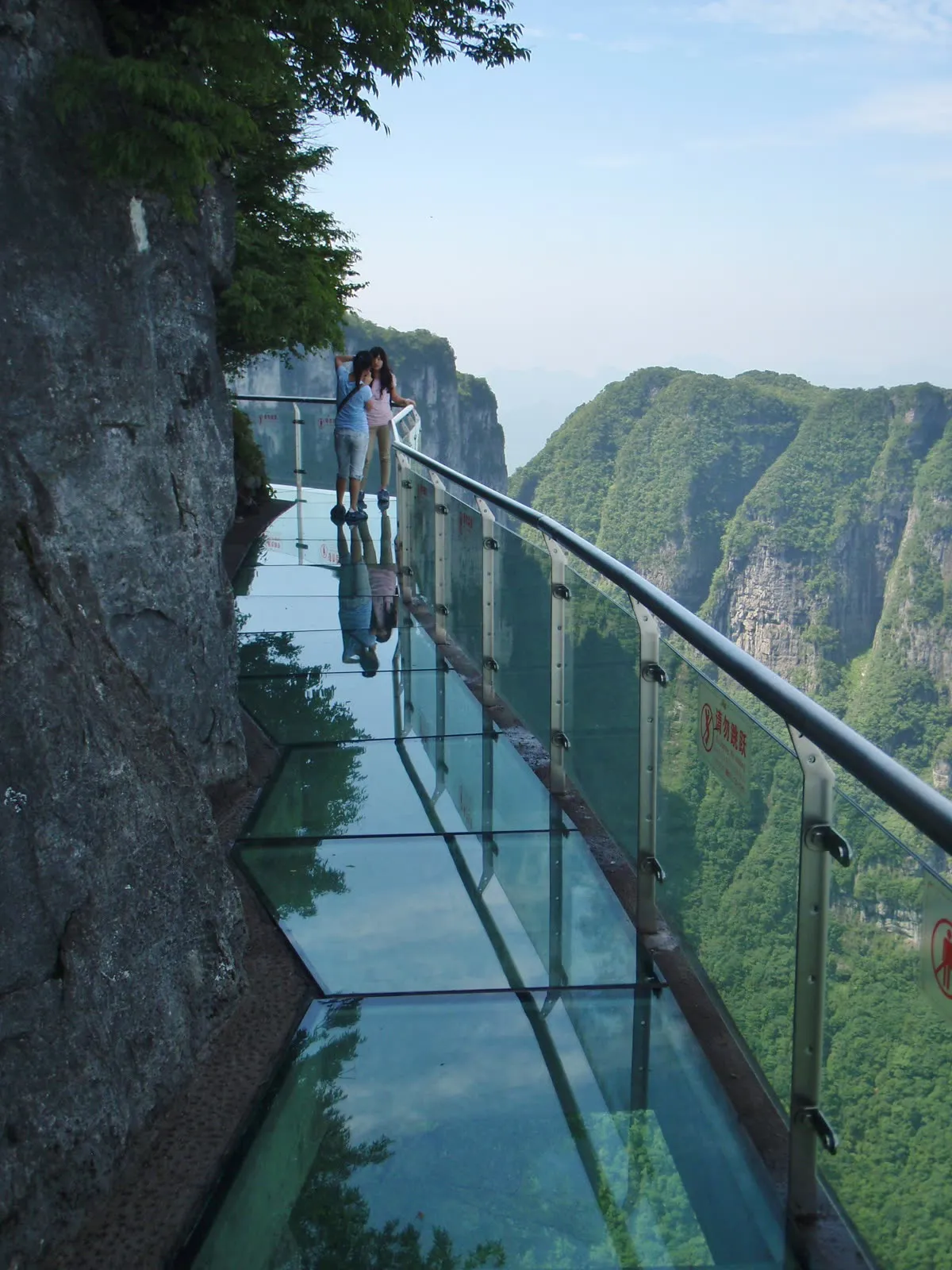
The glass skywalk is on top of Tianmen Mountain. It is a short cliff-hugging glass path along the summit loop, part of your Tianmen day. It is not in the Grand Canyon and it needs no separate ticket.
The glass bridge is the Grand Canyon’s glass-bottomed bridge, in Cili county, 25 to 30 km from Wulingyuan. The deck is 430 m long and 6 m wide, about 300 m above the valley floor, paved with 99 panels of layered glass. It is a separate ticket on a separate booking system with a daily visitor cap, and it is not part of either park.
Grand Canyon tickets come in three tiers on the scenic area’s own sales page:
- Route B, ¥216: the bridge plus the full canyon walk, the option most visitors take, three to four hours
- Bridge only, ¥125: ride out, walk the bridge, ride back, about an hour, no canyon access
- Route A, ¥91: the canyon walk without the bridge. If you buy A and decide at the gate that you want the bridge, there is no top-up; you buy a bridge ticket on its own
Decide before you pay. The B route is the one that photographs well from both ends; the bridge-only ticket makes sense when you are short on time and just want the crossing itself.
Where to base yourself: Wulingyuan or Zhangjiajie city
The right answer for most people is both, in sequence. That single piece of advice saves more time than any other on this page.
Wulingyuan town sits next to the forest park’s East Gate. Staying here means you walk or take a two-minute ride to the gate, and you avoid a transfer of roughly 40 to 60 minutes each morning. There are no hotels inside the park itself. Wulingyuan is the better base for two days of forest park, plus the Grand Canyon and Huanglong Cave.
Zhangjiajie city centre sits next to the Tianmen cableway’s lower station. It is the better base for Tianmen Mountain, for the tower lights at night, and for early trains and flights.
Foreigner-friendly options exist on both sides: the Pullman in Wulingyuan near the landmark gate, the long-established Expert Village Hotel a short walk from the same gate, the family-run No. 5 Valley lodge near the park’s west side, and international brands such as Hampton by Hilton near the park and Wyndham Garden by the cableway station in the city. Check recent reviews for the English-service level you need, since it varies property by property.
compare Wulingyuan and city-centre hotels on Trip.comGetting there: airport, high-speed rail and buses
By high-speed rail from Changsha, the route most travellers use, dozens of trains a day run from Changsha to Zhangjiajie West, with the quickest taking about an hour and fifty minutes over 264 km. Here is the trap: the cheap trains are the C-series, from around ¥151, and they leave from Changsha’s main station in the city. The G-series trains from Changsha South cost more and often take longer because of the routing. Paying more does not buy you a faster trip on this line.
From Hong Kong there is one direct service a day, G6080, leaving West Kowloon in the morning and reaching Zhangjiajie West in the late afternoon, about six and a half hours end to end. Fares move with demand, so check the booking platforms for your date.
Watch the station names. Zhangjiajie West is the high-speed station. Zhangjiajie station is the older conventional station. They are not the same place.
From Zhangjiajie West to Wulingyuan, an official shuttle runs about every ten minutes for ¥13, taking roughly half an hour to three-quarters of an hour to Wulingyuan’s bus station, which sits about 2 km from the East Gate: walkable, or one yuan on local buses 1 or 2. A taxi from the station or the airport to either park gate runs about ¥80 to ¥120 depending on which gate, over distances of 30 to 35 km.
From the city bus station next to the railway station, dedicated services run to the forest park gate for ¥12 in about 45 minutes, and to Wulingyuan for ¥13 in about 50 minutes.
By air, Zhangjiajie Hehua International Airport (DYG) has direct international services from several Asian cities plus domestic connections from Beijing, Shanghai, Hong Kong and other mainland hubs, and the route list shifts by season. The airport sits a short taxi ride from the Tianmen cableway’s lower station, which makes an arrival-day Tianmen visit technically possible, though ambitious.
Local city buses cost about ¥1. Taxis are metered, cheap by Western standards, and the night surcharge applies after ten in the evening.
How many days do you need for both?
Three to four days is the consensus across every operator and guidebook that publishes a number, and my own view after reading through the trip reports is that four is right if you also want the glass bridge.
- One day: choose one park, not both
- Two days: one day forest park, one day Tianmen
- Three days: forest park twice (pillars day, valley day), then Tianmen
- Four days: add the Grand Canyon glass bridge, optionally with Huanglong Cave or Baofeng Lake
- Five to seven days: add Furong Town and Fenghuang, both reachable by high-speed rail in under an hour
A sensible four-day shape: Day one, enter by the East Gate, ride the Bailong Elevator up to Yuanjiajie, walk to Tianzishan, come down by cableway. Day two, enter by the South Gate, climb Huangshizhai, then walk the Golden Whip Stream in the afternoon. Day three, Tianmen Mountain. Day four, the Grand Canyon glass bridge, then out.
Build one spare day if your trip is weather-flexible at all. Fog is the biggest single risk to a Zhangjiajie itinerary, and it is the one thing no ticket protects you from.
The honest downsides nobody puts in the brochure
Fog can cancel the point of Tianmen Mountain. Trip reports from independent travellers are blunt about this: when visibility drops, the cave, the skywalk and the 99 bends are all invisible, and you have paid the same price. Chinese guides say the same thing. If your dates allow it, keep Tianmen Mountain movable and go on the clearest forecast day of your stay.
The queues at the Bailong Elevator are real. Group tours cluster in the morning. Early morning and afternoon are lighter.
Prices quoted online are unreliable. Chinese articles still circulate figures for the Wulingyuan ticket that match neither the official ¥165 nor the ¥236 shuttle-inclusive price. Use the official platform or the scenic area’s own pages, and treat blog prices as a rough guide only.
The booking system is Chinese-first. The official channel for the forest park is the “Zhangjiajie One-Machine Tour” WeChat mini-program. It has an English toggle in the top right corner, and passports are accepted, but be ready for a Chinese interface and a real-name form. Entry is by timed slots through the day, and peak-season morning slots sell out days ahead. Tianmen Mountain’s own booking runs the same way, and its timed-entry rules have been strict about Route A in particular.
Everything is real-name. Your passport is your ticket on both sides. You show the original document you booked with; the forest park takes a face scan on first entry, and re-entry after the first day needs a fresh booking through the mini-program or at the gate. The Tianmen notices state the same rule for passports and other ID documents.
The glass bridge is capped at a daily visitor limit. Book ahead through the Grand Canyon’s own channels in peak season. Turning up on the day is a gamble.
The short version
Two parks, two tickets, two bases. The forest park at Wulingyuan is the ¥165 or ¥236 UNESCO mountain with the pillars, the valley walks and the elevator, valid four days. Tianmen Mountain is the ¥285 package above the city, with the arch and the glass skywalk, currently running on a reduced, construction-adjusted route while the main cableway is rebuilt. Book both with your passport, expect a Chinese-first booking system, and keep a spare day in your plan for weather.
For the rest of the trip, start with the China visit guide and the Google and WhatsApp access guide. Our Forbidden City ticket guide covers the same real-name booking idea for Beijing, and the full FAQ library answers the smaller questions.
Frequently Asked Questions
Frequently Asked Questions
Are Zhangjiajie National Forest Park and Tianmen Mountain the same place?
No. They are two separate scenic areas with separate tickets and separate booking systems. Zhangjiajie National Forest Park is the sandstone pillar park at Wulingyuan, about 40 km from Zhangjiajie city. Tianmen Mountain rises directly above the city, near the airport and the cableway's lower station in the centre.
Do I need one ticket or two for Zhangjiajie?
Two. The forest park ticket (¥165, or ¥236 with the shuttle) does not include Tianmen Mountain, and the Tianmen Mountain package (¥285 for adults) does not include the forest park. If you also want the glass bridge, that is a third ticket, sold separately by Zhangjiajie Grand Canyon.
How long do you need for each park?
One full day minimum for each, and two days is realistic for the forest park if you want both the Yuanjiajie pillars and the Golden Whip Stream valley walk. Tianmen Mountain is a single day of four to six hours. Most travellers give the two parks two to three days in total.
Is Tianmen Mountain worth it if the weather is foggy?
Fog hides the cave arch, the glass skywalk and the 99-bend road, and the ticket price does not change. If your dates are flexible, watch the forecast and put Tianmen Mountain on the clearest day of your stay.
Can I visit both parks in one day?
Not realistically. The two entrances are 40 km apart, the forest park's highlights are spread over a mountain the size of a small city, and Tianmen Mountain alone takes four to six hours. A one-day trip means choosing one of them.
Which park should I choose if I only have one day?
Take the forest park if you came for the pillar views, the Bailong Elevator and a full day outdoors. Take Tianmen Mountain if you want the cave arch, a cliff glass walkway and a cableway ride from the middle of town, and you are willing to gamble on the weather.
You might also find useful
Terracotta Army Tickets in 2026: Prices, Passport Booking and How to Get There
Terracotta Army tickets cost ¥120 for adults and ¥60 for students, the same price all year, and every visitor including foreigners has to book online in advance with a passport. Here is how the official booking works, what the ticket includes, the opening hours, and how to reach the site from Xi'an or the airport.
How to Buy Forbidden City Tickets as a Foreigner in 2026 (Passport Booking Guide)
Forbidden City tickets cost ¥60 (Apr–Oct) or ¥40 (Nov–Mar) and go on sale exactly 7 days ahead at 20:00 Beijing time. Here is how foreign visitors book with a passport, what happens when tickets sell out, and the refund rules most guides get wrong.
Beijing Attraction Reservations 2026: Which Sites Need Booking and How (Foreigner Guide)
Beijing attraction reservations: which sights still need booking, when tickets are released, the official channels, and whether a foreign passport is enough.